
Southside Data Centre
The Concept (informing the future proposal)
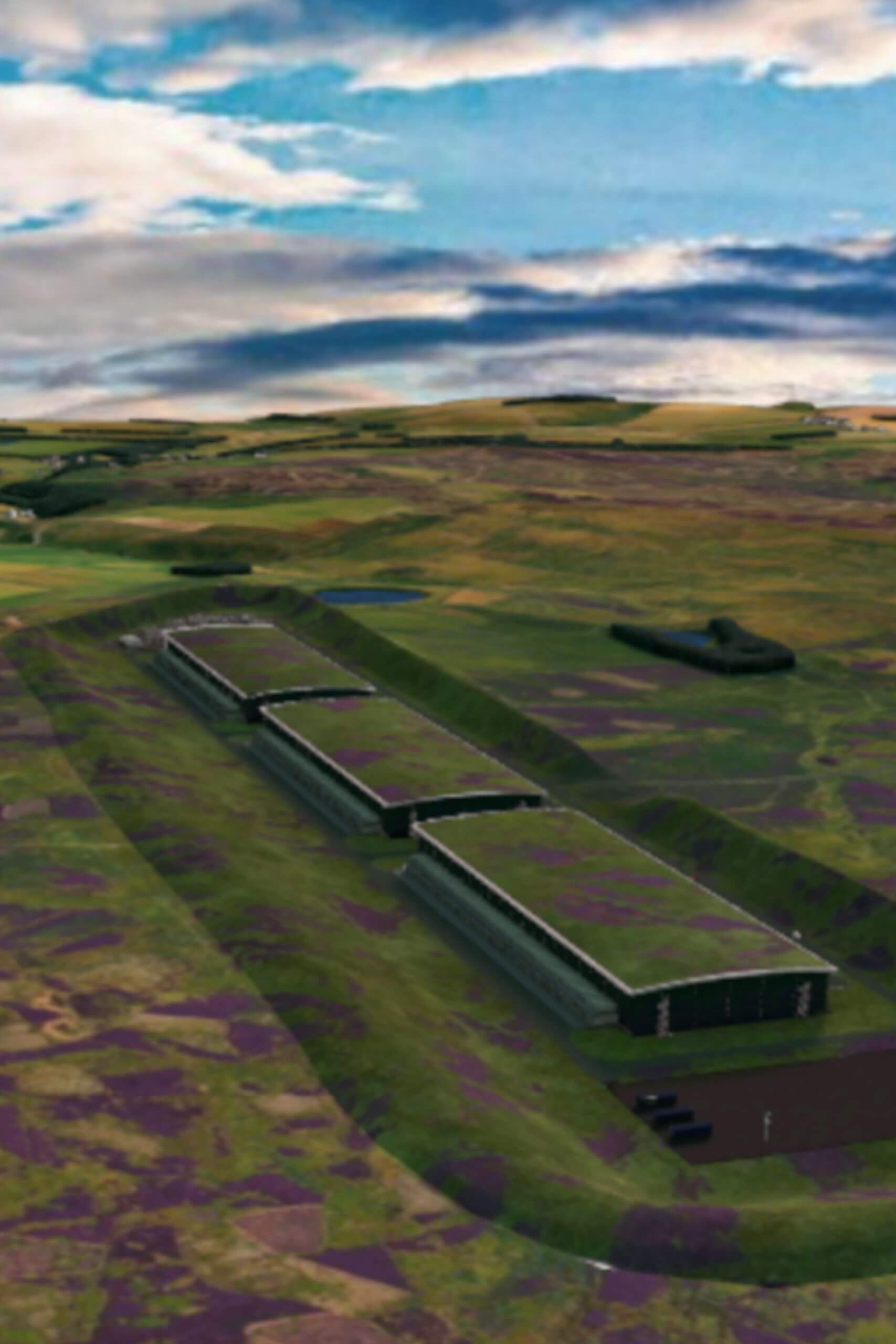
What could be built, and how
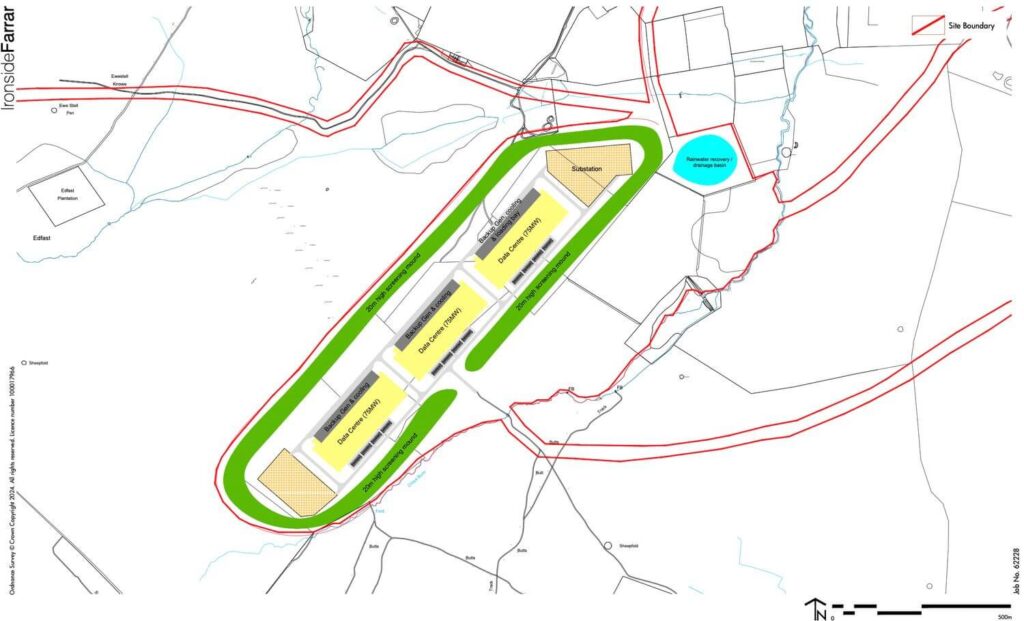
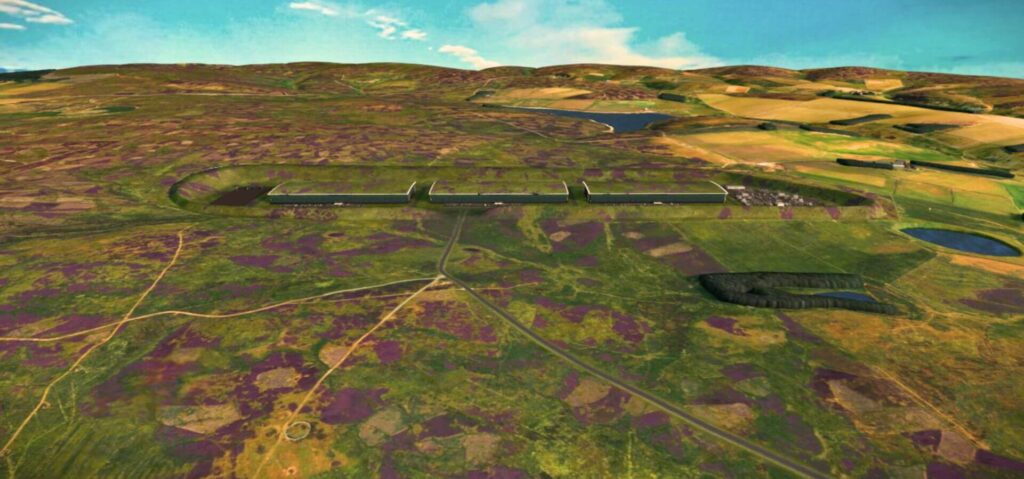
The proposed Southside Data Centre will comprise three data storage facilities set within a natural hillside bowl. Carefully sculpted and planted earthworks will wrap the perimeter to minimise visibility and integrate the structures into the rolling landscape.
The facility will include:
Three, two-storey data centre buildings with a maximum height of 24m, with a total ground footprint of around eight hectares, or 14 football pitches
An electrical substation
Car parking for each building
Screening: the buildings will be sunk deeper into the already existing bowl, allowing the displaced materials to be used for screening earthworks planted with native species to blend into the surrounding area
A closed loop cooling system, meaning the cooling of the centre will not interrupt local water supplies
A rainwater recovery basin and filtration plant to make the water useable to top up the cooling system, supply toilet facilities and other non-drinking water uses
An environmental enhancement area
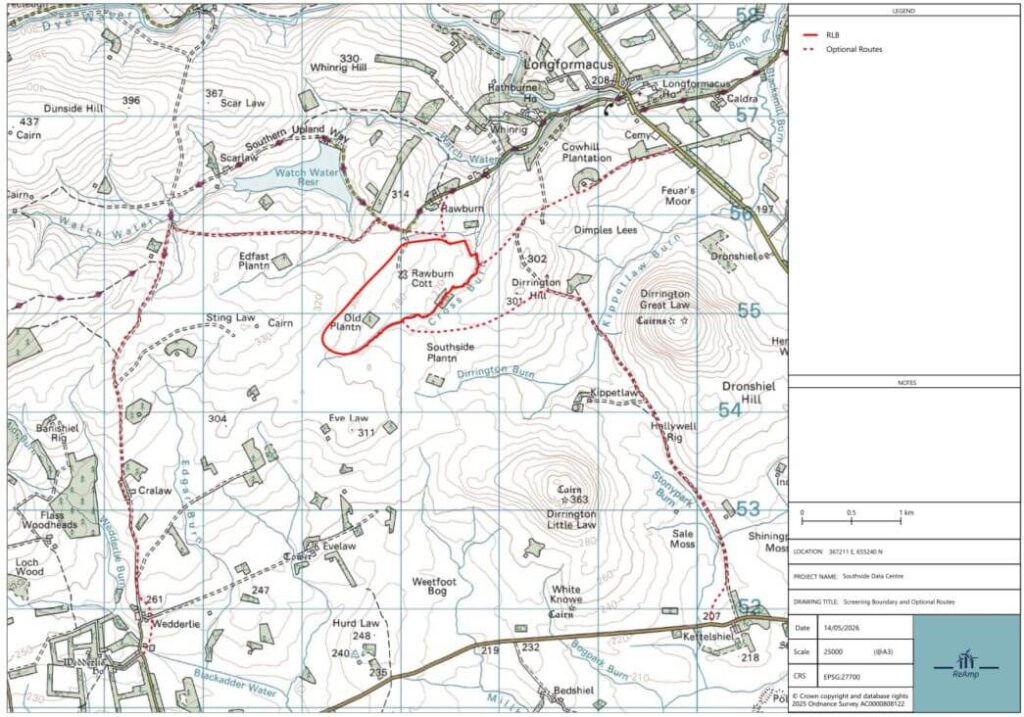
Proposed site location
Understanding the scale of the project
With a ground footprint of around 27,000 square metres per building and a maximum height of 24 metres (comparable to an eight-storey building), these are substantial structures.
To mitigate their visual presence, the design relies heavily on the site’s natural topography. Rather than standing on an exposed ridge or open plain, the buildings are set deep into an existing hollow which would be enhanced in depth, with excavated material used to construct additional screening around the perimeter. The surrounding earthworks, native planting, and a living roof are engineered to blend the facility into its moorland setting.
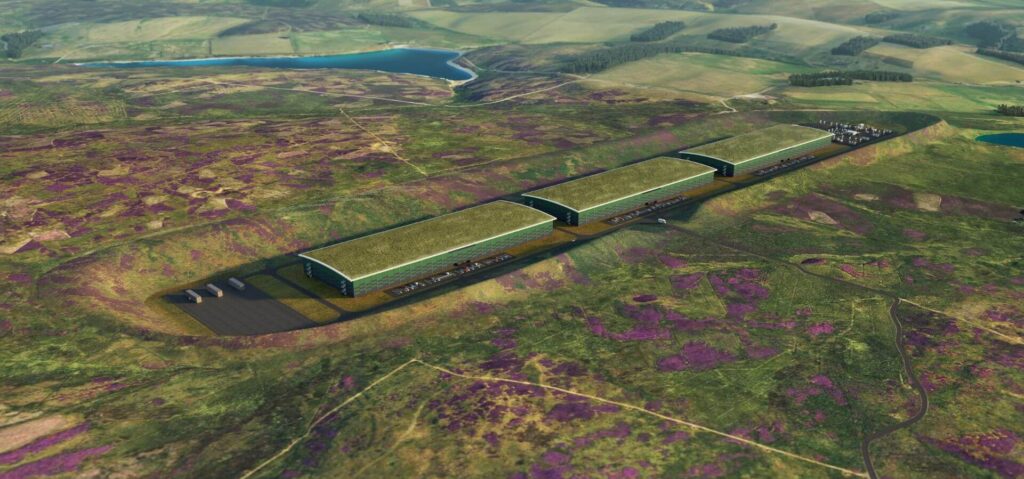
The visual impact will be formally verified by an independent Landscape and Visual Impact Assessment (LVIA) as part of the statutory Environmental Impact Assessment (EIA), ensuring the design effectively minimises visibility from local paths and roads.
A self-contained system
A key feature of the proposal is the closed-loop cooling system. Unlike conventional data centres that require continuous fresh water supplies, Southside’s system is fully sealed. It does not draw regularly from local rivers, lochs, or aquifers, nor does it return warm water to local watercourses.
The on-site rainwater recovery basin provides additional operational resilience, capturing surface run-off for non-potable uses. Furthermore, an independent feasibility study is underway to evaluate whether waste heat from the data centre can be redirected into a local district heating network, potentially turning an operational by-product into a direct energy resource for nearby homes and businesses.
Energy supply
The facility will be powered primarily by regional renewable energy through a resilient four-tier power strategy designed to maximise reliability while minimising environmental impact.
Wind energy
The primary source of electricity will be renewable wind energy supplied through the local electricity network. This provides the facility with low-carbon power generated by regional local wind farms.
Battery energy storage
The recently consented Shielburn Battery Energy Storage System will provide stored electricity to balance the network during periods when renewable generation and electricity demand do not align. This helps improve grid stability and ensures a more consistent power supply.
Fallago Rig Substation
The 400kV Fallago Rig substation, located near the site, offers the highest tier of reliability for connection to the national transmission system.
Gas Generators
As a final contingency, gas-powered generators connected to the nearby gas transmission network will provide emergency backup power in the unlikely event that all other electricity sources are unavailable. Because the generators are supplied directly from the gas network, there is no need to store large volumes of fuel on site, reducing both operational risk and visual impact. These generators will be "hydrogen ready", which means they could be run on hydrogen when the supply chain becomes more established in the South of Scotland.
Still have questions about what is being proposed?
Our FAQ page covers the most common concerns raised through the consultation process so far. If your question is not there, use the feedback form to put it to the project team directly.